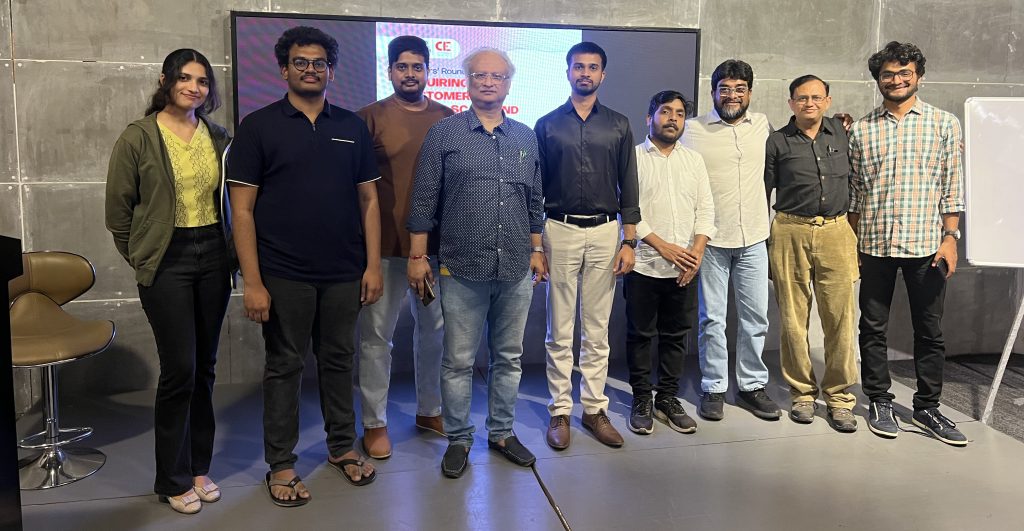
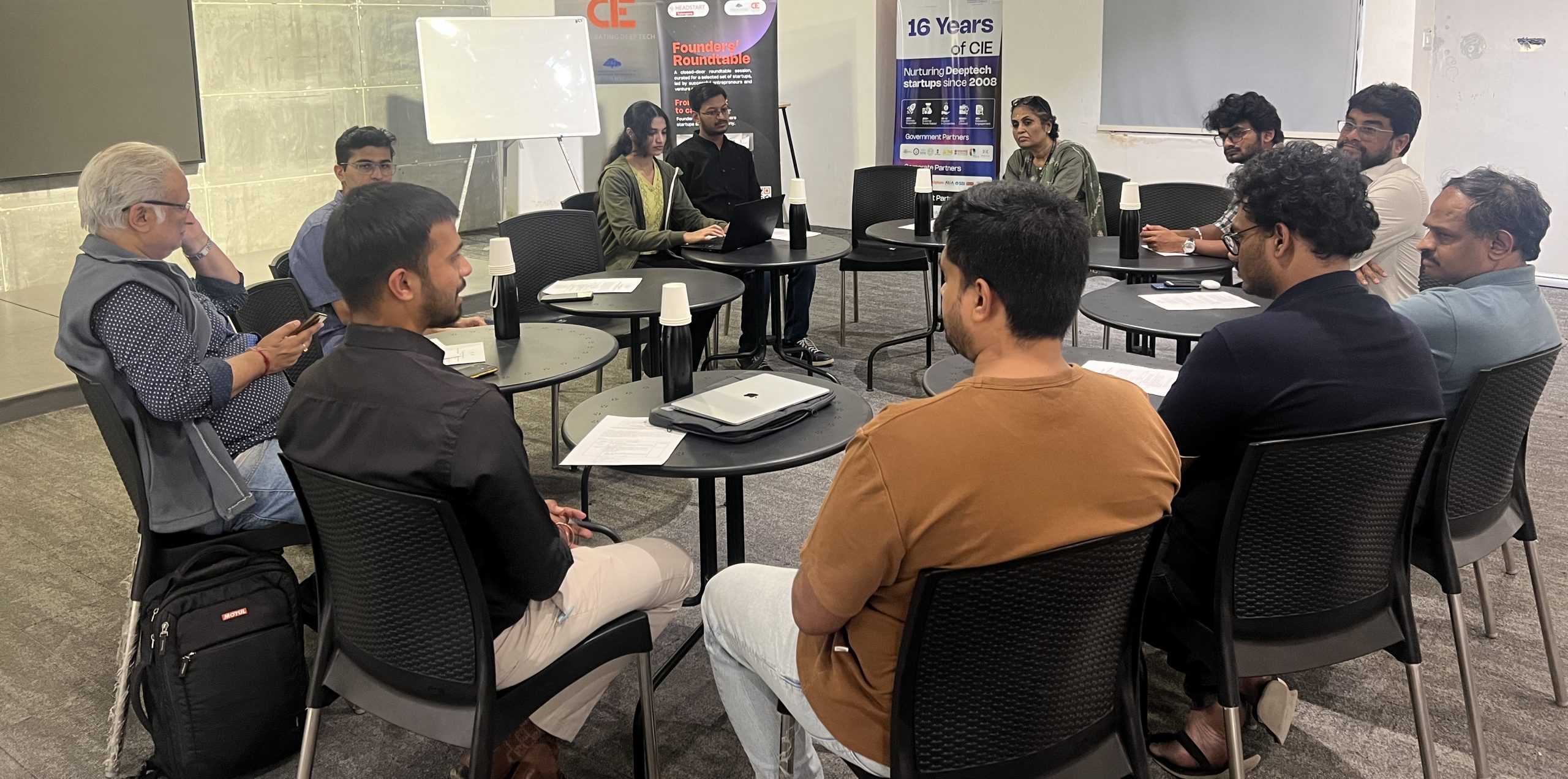
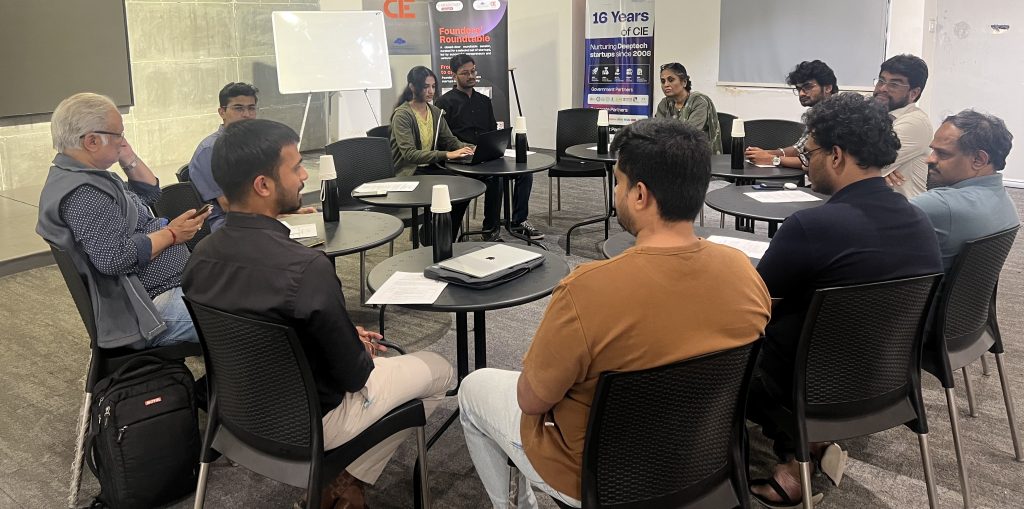
Early-stage startup success depends on clarity, validation, and disciplined execution. This feature captures strategic insights shared during the Founders Round Table hosted by CIE IIIT Hyderabad, where experienced founders and investor-mentors discussed real-world startup challenges.
The discussion focused on customer discovery, product validation, pre-seed strategy, funding readiness, and sustainable growth — critical factors that determine whether a startup builds strong foundations or struggles with premature scaling.
The deliberations identified key factors. Successful founders find these as key factors that influence early success:
· Successful startups begin with a clearly defined and narrow customer segment.
· Real traction comes from solving validated user pain points, not assumptions.
· Pre-seed should be treated as a learning and experimentation phase.
· Product development must be driven by ROI and measurable business value.
· Funding should follow product-market fit, not precede it.
· Community partnerships significantly enhance credibility and long-term growth.
Customer Precision and Value Creation
Early-stage startups often struggle not because of weak ideas, but due to unclear customer focus. A key insight from the session was the importance of identifying a clearly defined and narrow customer segment. Many founders attempt to serve broad markets, assuming scale will come from reach. However, real traction begins with precision deeply understanding a specific user group and solving a sharply defined problem. Clear customer profiling reduces wasted effort and strengthens early momentum.
Targeting the right customer also requires validating real pain points rather than relying on assumptions. Founders were encouraged to actively listen to users, test hypotheses, and refine solutions based on real feedback. Instead of aggressively chasing new users, improving engagement, retention, and lifetime value often creates stronger product relevance. Particularly in B2B startups, building a measurable and ROI-driven value proposition through pilots and prototypes ensures that growth is built on demonstrated impact.
Strategic Approach to Pre-Seed and Funding
The pre-seed stage was reframed as a structured learning and experimentation phase rather than simply a funding milestone. At this stage, founders should focus on validating problem statements, testing assumptions, building early product iterations, and establishing credibility with initial users. Treating pre-seed capital as a tool for disciplined experimentation increases learning velocity and reduces long-term risk.
Funding itself was positioned as a journey, not a destination. In the early stages, priority should be given to building an MVP and achieving product-market fit before pursuing aggressive fundraising. As startups mature, attention can shift toward scalable growth metrics, partnerships, and team expansion. Grant funding was also discussed as a strategic lever, best pursued selectively and aligned with product or research objectives.
Community, Trust, and Sustainable Growth
Beyond product and capital, sustainable startup growth depends on building trust and meaningful relationships within the ecosystem. Community engagement strengthens credibility, creates organic advocacy, and opens doors to partnerships. Founders were encouraged to think long-term and invest in relationships with users, mentors, and industry stakeholders.
For impact-driven startups, collaborations with NGOs, CSR initiatives, research institutions, and public bodies were seen as powerful tools for responsible scaling. A consistent pattern emerged: startups that combine focused customer validation, strategic funding alignment, and community-led growth are better positioned to build scalable and sustainable ventures.
—
Contributors
The insights in this paper were compiled during The Founders Round Table held on 28th January 2026, hosted by CIE IIITH. Kiran Chakravarthahula – Incharge, Innovation, Incubation, Entrepreneurship and Globalisation, and VJ Hub; Manager at Vignan Jyothi Institute of Engineering and Technology. Sandip Poddar – CIE Resident Mentor and Co-founder of Navikarna Ventures. Subbaraju Pericherla – Founder, Crossborders