A year ago, building an AI application often meant writing a few prompts and hoping the chatbot produced the right answer.Today, AI has evolved far beyond simple conversations. Modern AI agents can remember previous interactions, search documents and complete complex tasks with minimal human intervention. From grocery shopping assistants and thousands of lines of code, AI is rapidly transforming the way we think, work, and solve problems.
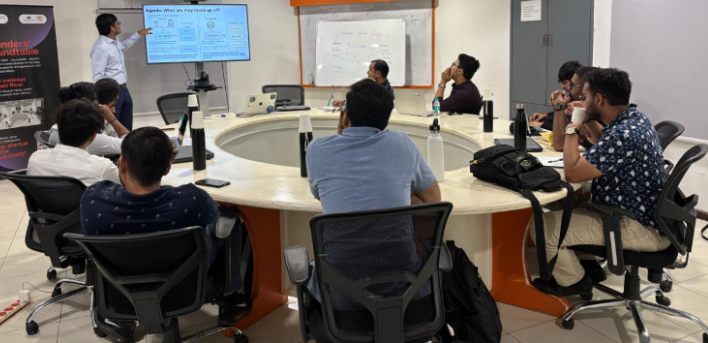
To help founders understand this rapidly changing landscape, CIE IIITH held its 7th edition of CV Labs, an Agentic AI Workshop, where participants explored how today’s AI systems work, with IIITH faculty sharing their expertise.
The first day began with a fascinating journey through the evolution of software over the past three decades from traditional programs that simply followed instructions to intelligent systems capable of learning, reasoning, and making decisions.Participants were introduced to the idea of Artificial General Intelligence (AGI) AI that could one day adapt to new situations and solve problems much like humans, rather than being limited to a single task.The session also explored semantic similarity, explaining how AI doesn’t just read words it understands their meaning.
By converting language into mathematical representations, modern AI can recognize that phrases like “book a flight” and “reserve a plane ticket” express the same intent, even though they use different words.Another exciting concept was Retrieval-Augmented Generation (RAG). Instead of relying only on what it has already learned, RAG enables AI to search trusted documents and external knowledge sources before generating a response. This allows AI assistants to provide answers that are more accurate, up-to-date, and relevant making them far more useful in real-world applications.
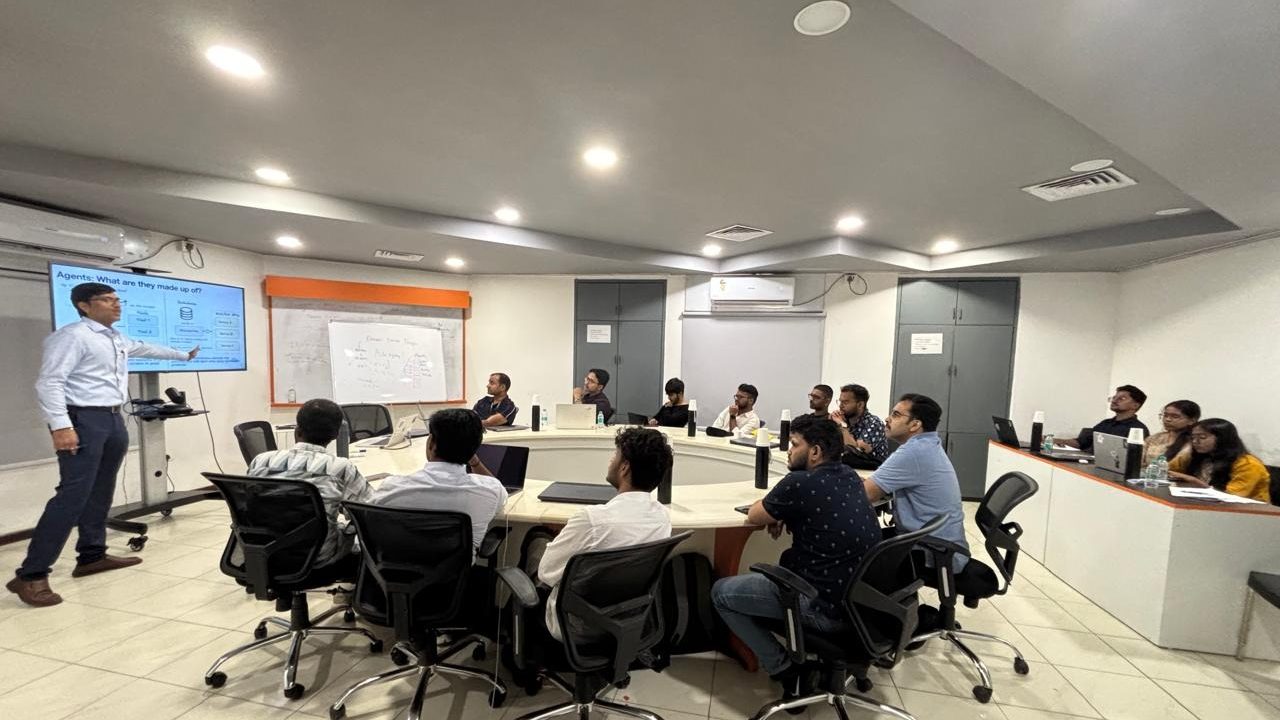
The second day shifted the focus from using AI to building AI that can actually get things done .One of the biggest takeaways was that not every AI chatbot is an AI agent . A real AI agent combines memory, reasoning and actions to understand its environment and complete tasks.
The workshop also introduced the Model Context Protocol (MCP), a common standard that helps AI connect with tools like calendars, knowledge bases, and cloud services. This allows AI agents to go beyond conversations and interact with real-world applications.The day concluded with a demonstration of how prompts, reasoning, and external tools work together, showing how modern AI can do much more than answer questions.
On the third day, participants saw Agentic AI in action through a simple trip-planning example. Instead of one AI trying to do everything, different AI agents worked together, with each handling a specific task.The session also highlighted the importance of memory in AI. Just like people remember past conversations, AI agents can use memory to retain context, learn from previous interactions, and provide better responses over time.The day concluded with an important reminder: building great AI isn’t just about creating powerful models. For AI to be truly useful in the real world, it also needs to be reliable, secure, and responsibly managed.
Conclusion
The Agentic AI workshop provided participants with an understanding of key concepts such as LLMs, RAG, MCP and Memory Systems. The program began with three days of in-person sessions, followed by online sessions to continue learning advanced topics. To reinforce practical application, participants designed an AI assistant using RAG and later developed an MCP based agent.
Overall, the program equipped founders with the knowledge and hands-on experience needed to build scalable, AI-powered solutions for real-world applications.
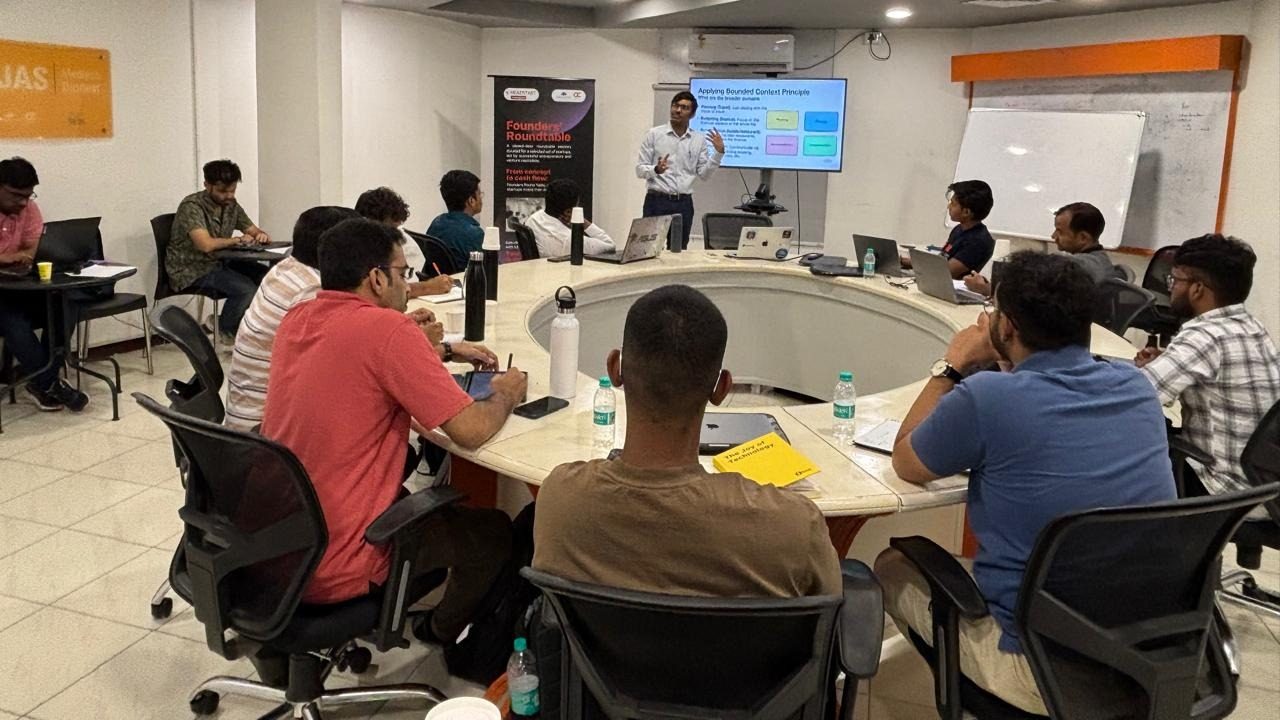
Speakers:
Dr. Karthik Vaidhyanathan – Assistant Professor , Arihant Tripathy – RA , Aviral – RA
Startups:
AdvoHQ: AI litigation platform that organizes legal documents, extracts case insights, and helps lawyers manage deadlines and risks.
QUAICU Solutions: Governance-first AI operating system enabling compliant, human-supervised automation for regulated industries.
Delta7 Edu-Frameworks: AI-powered accountability platform for K–12 schools, providing real-time insights into teaching quality, student performance, and learning outcomes.
Core-X-Telemetry: AI workforce orchestration platform that coordinates human teams and AI agents through secure workflow automation.
Nirmata Neurotech: AI-driven skin intelligence platform that monitors skin health and delivers personalized recommendations.
Indgeos Geospatial: Creator of Ind Maps, an agentic platform for intelligent geospatial mapping and analysis.
Neurolake AI Private Limited: AI-powered SaaS platform that unifies enterprise data, automates operations, and delivers actionable business insights.
Razorops: AI platform that continuously optimizes Kubernetes clusters for maximum performance and cost efficiency.
iNeural: AI-powered talent intelligence platform that helps employers identify and hire verified engineering talent.
InseLabs: AI-based identity protection platform that detects and prevents unauthorized use of face and voice online.